How Long Can a Dryer Vent Be in Florida?
Thirty-five feet, with two exceptions
Thirty-five feet of equivalent length, unless the dryer manufacturer's instructions allow more or a listed booster fan is installed. The Florida Building Code, Residential follows the International Residential Code here, in section M1502. The length is measured from the wall connection to the outside termination, and the transition hose behind the dryer does not count. Confirm the current edition's wording with your building department; the numbers below are the model code's.
Elbows count against you
Every fitting reduces the 35 feet. In the code table, a 4-inch mitered 90-degree elbow counts as 5 feet; smoother, larger-radius elbows count for less. So a run that measures 20 feet with three sharp elbows is already at 35. Most vents that cause problems in Tampa are not long in feet; they are long in elbows.
The other rules
- Smooth rigid metal duct, 4 inches in diameter, for the concealed run
- Joints taped or clamped, not screwed through into the airflow
- A transition hose of no more than 8 feet, visible, not inside a wall or ceiling
- Termination outside the building, never into an attic, crawlspace or garage
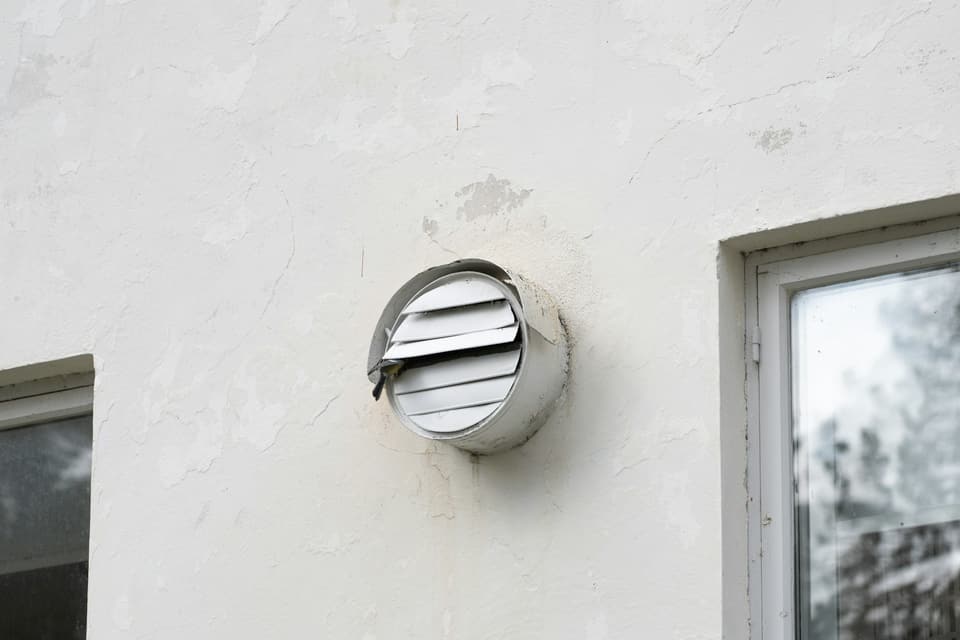
- A backdraft damper at the termination, and no screen
- Where the equivalent length exceeds 35 feet, a permanent label within 6 feet of the dryer connection saying so
Manufacturer limits and booster fans
The code lets the dryer manufacturer's installation instructions set the maximum length, and some allow longer runs than 35 feet. Those instructions have to be available to the inspector. For runs that cannot be shortened, a dryer exhaust duct power ventilator, listed to UL 705, is permitted and its own instructions set the length. It needs maintenance like the rest of the vent.
What to do if yours is too long
Have it cleaned more often, every six months, as a stopgap. Then look at whether the route can be shortened to the nearest exterior wall. In a condo, ask the association before anyone cuts an opening. In a single-family house, ask whether a permit is needed.
Call for a free quote. A company can measure the run and count the elbows on the first visit.
Where to go next
Common questions
Does the hose behind the dryer count toward 35 feet?
No. The transition duct is excluded from the length, but it is limited to 8 feet on its own.
Can I use flex duct inside the wall?
Not for the concealed run. Flexible foil or plastic belongs, at most, in the short visible connection behind the dryer, and listed for that use.
My vent goes out through the soffit. Is that allowed?
Soffits draw air into the attic, which is why a wall or roof termination is the better route. Ask your building department how they treat it.