Dryer Vent Repair and Rerouting in Tampa
Some dryer vents are not dirty so much as wrong: too long, too many bends, crushed behind the machine or disconnected in the attic. Cleaning those buys a few months. Fixing them is a one-time job.
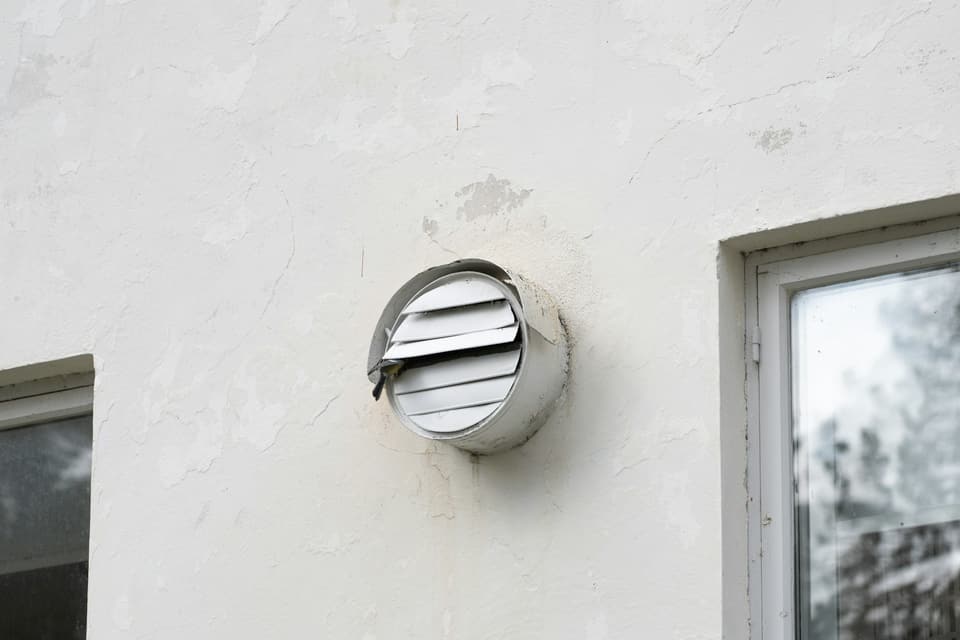
How to tell repair from cleaning
If the vent was cleaned recently and the dryer is slow again within months, the problem is usually the route. Other signs: lint on the attic insulation, a damp patch on a ceiling below an upstairs laundry, a hood on the outside wall that never moves, or a run that goes up into the attic and then across the house to a gable or soffit. A soffit termination is a common mistake in older Florida installs, because the moist lint-laden air gets pulled straight back into the attic through the soffit vents.
What Florida code expects
The Florida Building Code, Residential follows the International Residential Code on dryer exhaust. The short version, worth checking against the current edition with the City of Tampa or the county:
- Four-inch smooth rigid metal duct for the concealed run, not flex
- A maximum developed length of 35 feet, reduced for every bend (a sharp 90-degree elbow counts as 5 feet)
- Or a longer length where the dryer manufacturer's instructions allow it
- Transition hose no longer than 8 feet, not concealed in a wall or ceiling
- No screws poking into the airstream; joints are taped or clamped
- Termination outside the building with a backdraft damper and no screen
- Where the equivalent length exceeds 35 feet, a label near the dryer connection saying so
The length rule is the one most Tampa vents break. A laundry room in the middle of a two-story house with a vent that climbs to the roof, crosses the attic and adds four elbows can be well past 35 equivalent feet.
The usual fixes
Shortening the route
Moving the termination to the nearest outside wall, or straightening a run that wanders through the attic, is the best fix when the building allows it. In a single-story Tampa block home, a new wall penetration is often possible. In a condo it usually is not.
Replacing flex with rigid
Plastic or foil flex hidden in a wall or attic is replaced with smooth metal. Smooth walls shed lint; ribbed walls catch it.
Rebuilding the termination
A cracked roof cap, a hood with a screen, or a damper stuck shut gets replaced. On a roof, the flashing matters as much as the cap, and anyone cutting into a roof should be dealing with a roofing question, not just a vent one.
A booster fan, where the run cannot be shortened
A dryer exhaust booster fan listed for the purpose (the code refers to UL 705) can make a long run work. It needs power, a lint-tolerant design and periodic cleaning of its own, and it is the answer only after shortening has been ruled out.
Permits and licenses
A repair that replaces duct along the same route is usually treated as maintenance. New penetrations through a roof or exterior wall, or work that alters fire-rated assemblies in a condo, may need a permit; the City of Tampa Construction Services Division and Hillsborough County Development Services decide that, not the company quoting you. Ask the company whether they will pull a permit if one is needed, and who holds the license it is pulled under.
Call for a free quote. A photo of the dryer connection and of the outside hood, sent after the call, usually tells a company most of what it needs.
Other work in Tampa
- Air Duct Cleaning in Tampa, FL
- Dryer Vent Cleaning in Tampa
- Mold in Air Ducts in Tampa Homes
- Condo and Townhome Dryer Vents in Tampa
Also serving
Vent Repair & Rerouting is available outside Tampa too, across Brandon , Riverview , Westchase and Wesley Chapel .
Common questions
How much does dryer vent rerouting cost?
It depends almost entirely on the route. A short wall reroute on a single-story house is a modest job; a new roof termination or rebuilding a long attic run costs considerably more. Expect an on-site quote rather than a phone price.
Is it OK for the vent to end in the attic or garage?
No. Dryer exhaust must terminate outside the building. Venting into an attic or garage puts lint and moisture where they cause fires and mold.
Can a vent go out through the soffit?
It is a common shortcut and a poor one, because soffit vents pull air into the attic. A wall or roof termination with a proper damper is the better answer.
Are booster fans safe?
A fan listed for dryer exhaust and installed to the manufacturer's instructions is permitted by the code. It is not a substitute for cleaning, and it needs its own maintenance.
Birds keep nesting in my vent. What helps?
A hood with a working gravity or magnetic damper rather than a screen. Screens are not allowed on dryer terminations because they trap lint.
Get a quote for vent repair & rerouting
Tell us about the house or condo and a local duct and dryer vent company will be in touch usually within a few days. Answered Mon–Sat, 8am–6pm · after hours, a call back the next morning You can also call (813) 491-9573, which is usually quicker.